The evolving role of waste-to-energy in Australia’s circular economy
The role of waste-to-energy (WtE) in Australia is evolving in response to policy settings that prioritise landfill diversion and resource recovery. A pillar of the current policy landscape is the Australian Government’s Circular Economy Framework, which sets out national targets to be achieved by 2035, including doubling the economy’s circularity by:
reducing per-capita material footprint by 10%;
increasing material productivity by 30%; and
safely recovering 80% of resources.
Consistent with these goals, the waste hierarchy remains an important framework for decision-making and for prioritising interventions across the system.
The Waste hierarchy
Within this hierarchy, WtE should be viewed as a targeted technology pathway for residual resource recovery, rather than an all-purpose solution. Its value proposition lies in managing the fraction of waste that is not technically, environmentally, or economically practicable to address through higher-order options such as avoidance, reuse or recycling, thereby preventing those materials from being sent to landfill disposal.
Current national data indicates that Australia’s overall recovery rate—covering reuse, recycling and energy recovery—sits at approximately 63%. Progressing toward the 80% target will require scalable solutions for residual streams.
WtE is positioned to support the outcomes of the policy objectives and, when deployed strategically within the hierarchy, can support the broader transition to a circular economy without undermining higher-value resource pathways.
Implementing WtE technologies can achieve:
reduced reliance on landfill disposal, thereby mitigating methane emissions, leachate and land-use burden;
production of outputs including energy and fuel generation from materials that cannot be recycled or reused; and
supporting circular economy infrastructure by closing the loop on lower value and hard to recycle residuals, thereby freeing up upstream reuse/recycle capacity for higher-value materials.
The three dominant waste to energy technologies
The main WtE technology processes can be broadly categorised as mass-burn incineration (conventional combustion), anaerobic digestion and advanced thermal treatment (primarily comprising pyrolysis and gasification). These three process technologies represent more than 95% of operational and developing WtE capacity worldwide.
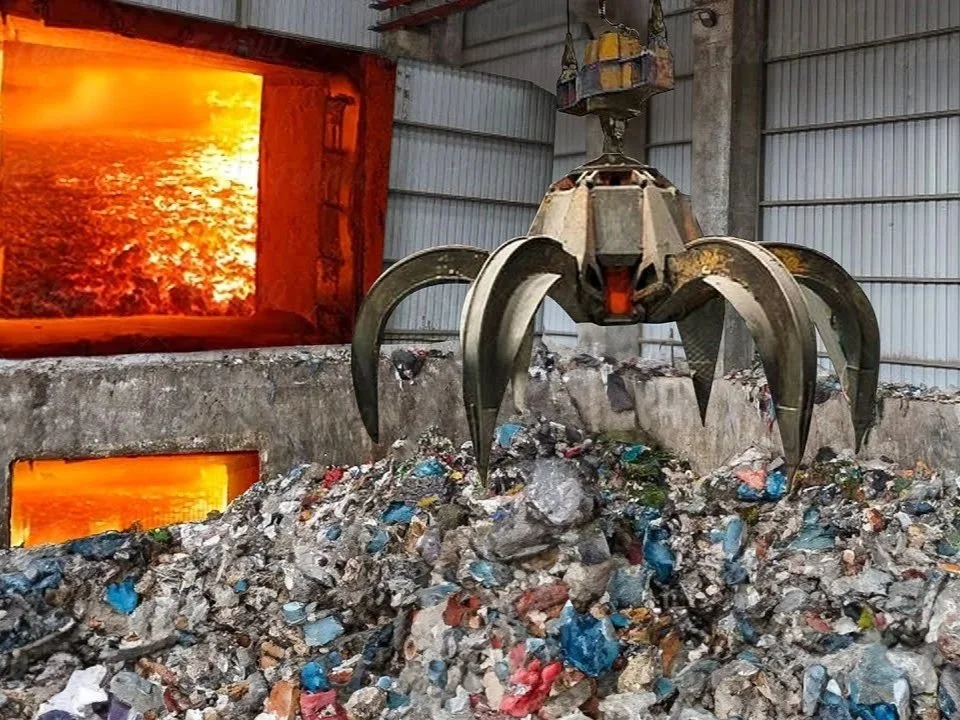
Mass-burn incineration
Conventional combustion
-
Burns waste at high temperatures to generate steam for electricity and/or heat. It is an established form of WtE with widespread use across Europe, Asia and North America. Australia’s Kwinana Waste to Energy Plant uses this technology, marking the country’s first large-scale commercial facility.
By-products comprise IBA (Incinerator Bottom Ash) which can be beneficially re-used as a construction aggregate, and APCr (Air Pollution Control Residue) which typically requires hazardous landfill disposal - although technologies are emerging for beneficial reuse.
-
Advantages: Technically and commercially proven; strong economies of scale; can process many waste streams with no or minimal pre-treatment; and can provide reliable baseload electricity generation, compatible with district heating networks.
Limitations: High capital and operating costs; requires advanced emissions control; and less efficient for wet or low-calorific waste.
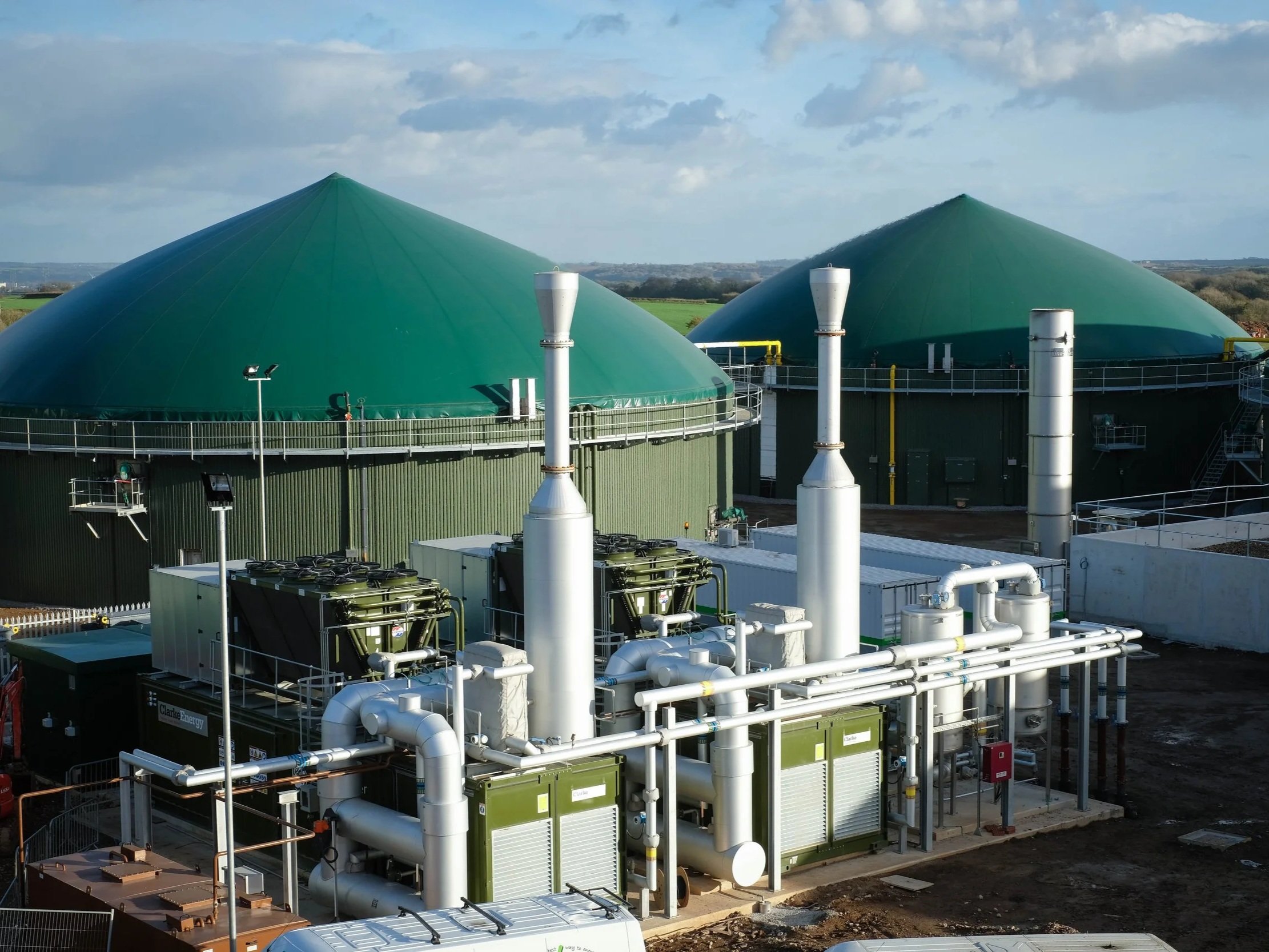
Anaerobic digestion
Biological process
-
Uses microorganisms to break down organic waste such as food and garden waste as well as agricultural residues into biogas and digestate.
This biological conversion pathway is well-established globally and is increasingly adopted as part of integrated waste management and renewable energy strategies. It supports both on-site energy generation and the production of nutrient rich soil amendments, making it well-suited to circular economy applications.
-
Advantages: Produces renewable biogas and soil by-products retaining valuable soil nutrients; lower capital costs; and can be applied at smaller scales.
Limitations: Limited to organic waste streams; lower energy yield per tonne; digestate requires safe management; and organic waste streams can often require pre-treatment and contamination removal.
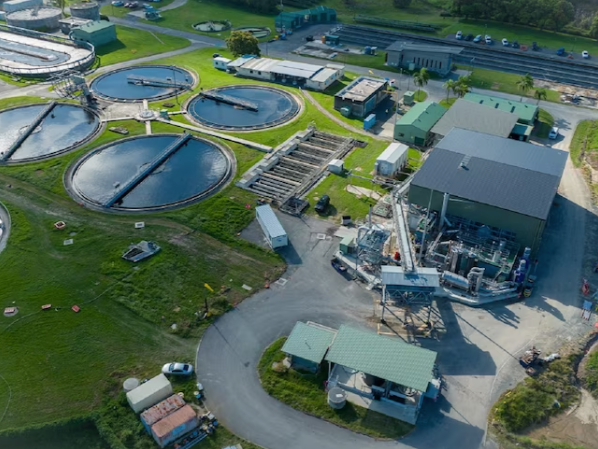
Gasification and pyrolysis
Advanced thermal conversion
-
Decomposition of waste at elevated temperatures in limited oxygen (gasification), or in the complete absence of oxygen (pyrolysis).
Outputs include syngas, char and oil/liquid fuel which can be utilised as fuels for energy or sold as products. it is increasingly explored for hard-to-recycle plastics and other residual waste streams where conventional material recovery is limited.
-
Advantages: Many solutions are modular and can be applied at smaller scales; and produces products with flexible end uses (energy, fuels, chemical products).
Limitations: Typically better suited to sorted, homogenous waste, with limited success for mixed waste at larger scales; products can be costly to upgrade to required specifications with limited markets in some regions; and typically poorer economies of scale.
Selecting an appropriate WtE technology is not a one-size-fits-all exercise.
Selecting an appropriate WtE technology is not a one-size-fits-all exercise. Every project operates within a unique set of parameters that strongly shape the suitability and performance of potential solutions. Considerations include:
the characteristics of the feedstock, including moisture content, calorific value and contamination levels, play a central role in determining which conversion pathway (thermal, biological or hybrid) can be viably adopted; and
regional variables such as local waste composition, the availability and capacity of grid or thermal offtake connections, environmental approvals and emissions limitations, and the level of community expectation and social licence also materially influence what is feasible.
In practice, this means the most successful projects are those that begin with a technology-agnostic approach rather than anchoring themselves to a preferred solution too early.
A structured assessment of needs, constraints and regional opportunities creates space for innovation, reveals where value can be maximised and prevents the project from being forced into a suboptimal pathway later in delivery. It also supports more robust stakeholder engagement and clearer risk allocation across development and operations.
The Practical Takeaway for Future WtE Deployment in Australia
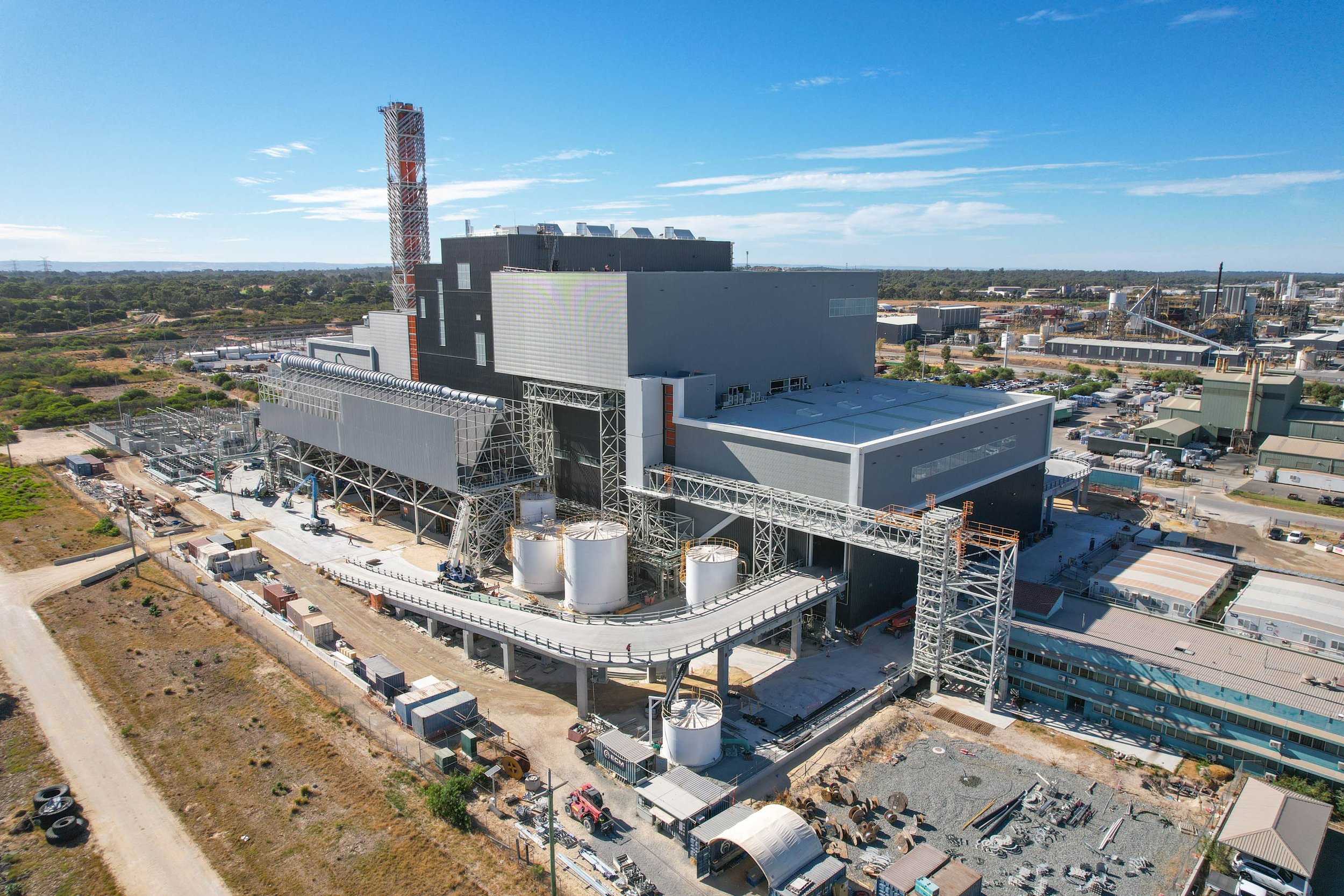
Kwinana Facility, WA
In practical terms, the policy environment does not imply that Australia needs more WtE for its own sake, but rather that WtE has a defined and measurable role where residual waste streams remain unavoidable.
If Australia is to close the gap between the current 63% recovery rate and the 80% target, scalable solutions for residuals will be required alongside - not instead of - avoidance, reuse and recycling. When deployed within the discipline of the waste hierarchy, WtE plays a role in landfill diversion, supporting positive environmental outcomes and recovering value from materials that cannot be viably processed through higher-order pathways.